A crowded morning can expose the limits of a conventional water heater fast. One long shower, a dishwasher cycle, and a load of laundry may leave the last person in line with lukewarm water. Tankless water heaters solve that problem differently: rather than storing and reheating a full tank of water, they heat water as it moves through the unit.
That sounds simple, but the right choice depends on your household’s hot-water habits, your home’s fuel source, local water conditions, and the condition of your existing plumbing. For many Utah County homes, a properly selected and installed tankless unit offers dependable comfort and lower energy waste. For others, a high-efficiency tank water heater may make more financial sense.
How Tankless Water Heaters Work
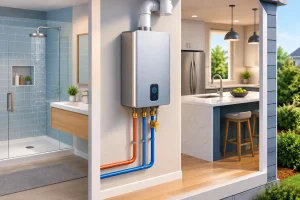
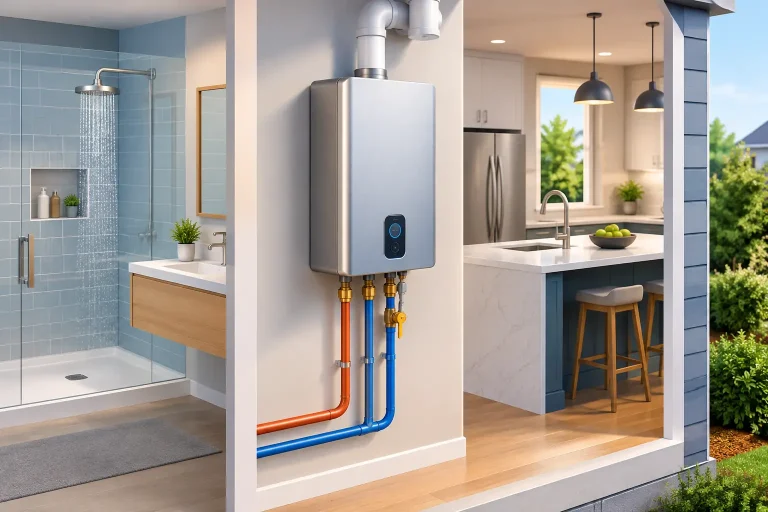
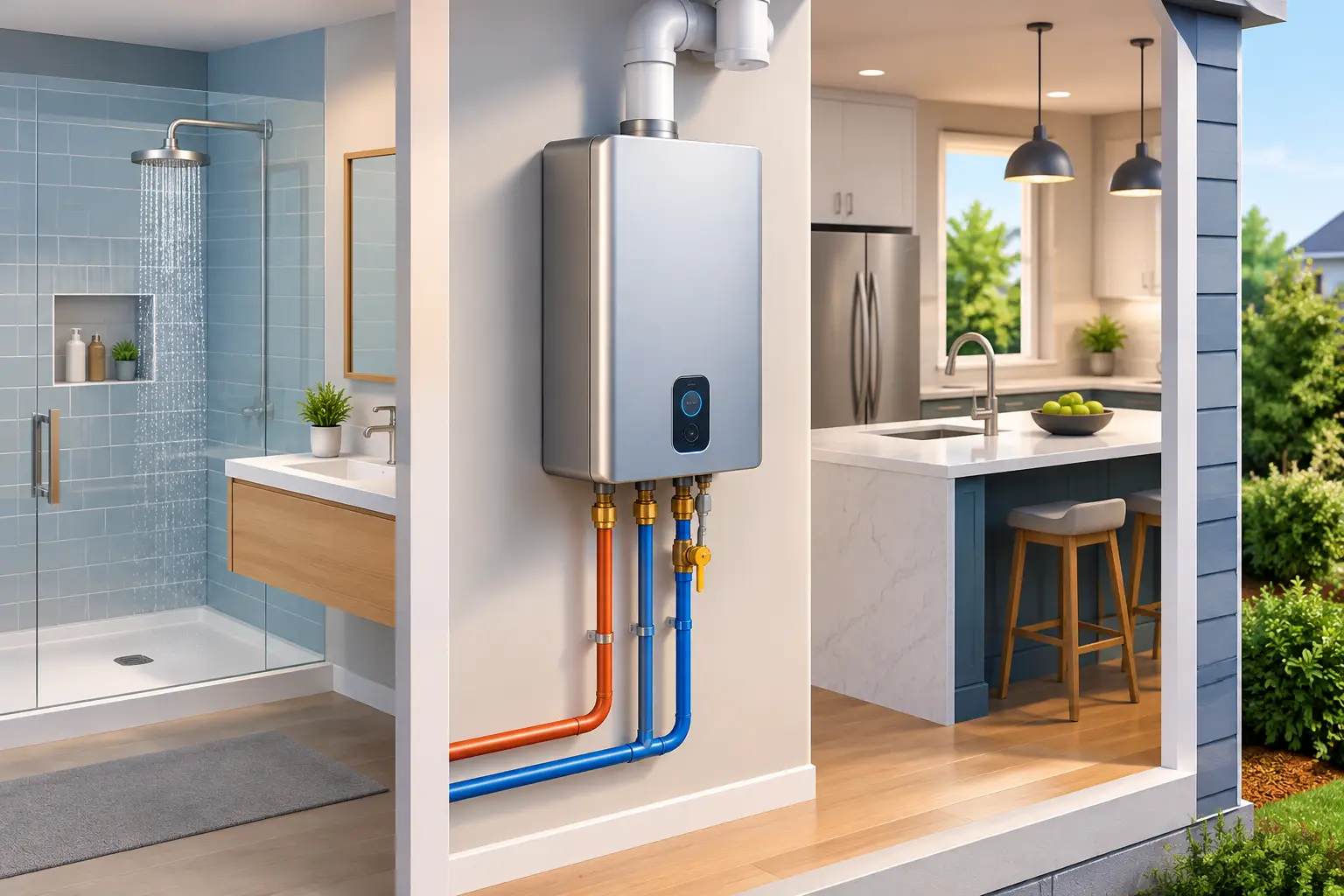
When you open a hot-water faucet, cold water travels through the tankless unit. A gas burner or electric heating element activates, raising the water temperature before it reaches the fixture. When the faucet turns off, the heating stops. There is no storage tank continuously keeping 40 or 50 gallons hot while nobody needs it.
This approach reduces standby heat loss, which is the energy a tank-style heater uses simply to maintain its stored water temperature. It can also provide a long supply of hot water, as long as the unit is sized to keep up with demand.
The phrase “endless hot water” is common, but it needs a little context. A tankless system can heat water continuously, yet every model has a maximum flow rate. If a unit is asked to support two showers, a dishwasher, and a washing machine at the same time, it may not deliver the desired temperature at every fixture. Sizing is what separates a great tankless experience from a frustrating one.
Sizing Matters More Than Tank Capacity
With a conventional water heater, homeowners usually compare tank gallons. With a tankless model, the key measurement is gallons per minute, or GPM. Your plumber considers how much hot water your household may use at once, then matches the unit’s output to that demand.
A shower may use roughly 1.5 to 2.5 GPM, depending on the showerhead. Kitchen faucets, dishwashers, washing machines, and large soaking tubs add to the demand. A family that regularly runs two showers at once needs a different system than a couple in a smaller home with one bathroom.
Utah’s winter temperatures also matter. In colder months, water enters the home at a lower temperature, so the heater has to work harder to achieve the temperature set at the fixture. A unit that performs well on paper may be undersized for a larger household during the coldest part of the year if the incoming water temperature was not considered.
A professional evaluation should account for your home’s peak demand, number of bathrooms, fixture flow rates, desired water temperature, fuel type, and incoming water temperature. This is not the place for guesswork or choosing a model based only on the highest advertised GPM.
Gas vs. electric tankless systems
Gas tankless units are often the practical choice for whole-home applications because they can deliver higher flow rates. However, installation may require changes to the gas line, new venting, or an upgrade to combustion air requirements. Those details affect both the installation scope and cost.
Electric tankless water heaters can be a fit for point-of-use applications, such as a bathroom addition, workshop sink, or remote area of the home. A whole-home electric system may require substantial electrical capacity, including dedicated high-amperage circuits or an electrical-panel upgrade. The best option depends on the home, not just the equipment price.
The Benefits Homeowners Notice
The biggest benefit is usually consistency. A correctly sized tankless water heater does not run out of stored hot water after a series of showers. That can make mornings easier for busy households and improve comfort in homes with large tubs or frequent overnight guests.
Tankless units also take up far less room than a traditional tank. They mount on a wall, which can free up useful space in a utility room, garage, or mechanical closet. This can be especially helpful when remodeling, finishing a basement, or replacing an aging system in a tight space.
Energy savings are another reason homeowners consider the upgrade. Because the unit heats water only when needed, it avoids much of the standby energy loss associated with storage tanks. Actual savings vary with household usage, fuel costs, insulation, and the efficiency of the old water heater being replaced. A family that uses a lot of hot water may see a different result than a household that is away much of the day.
Tankless equipment also tends to have a longer service life than many conventional tank water heaters when it is maintained properly. The heat exchanger can last for many years, but maintenance is not optional, especially in areas with hard water.
Hard Water Can Change the Equation
Homes throughout Utah County commonly deal with mineral-heavy water. Calcium and magnesium can build up inside a tankless heat exchanger, restricting water flow and making the system work harder. Over time, scale can reduce performance, trigger error codes, and shorten equipment life.
Annual flushing helps remove mineral buildup before it becomes a costly repair. In homes with particularly hard water or high hot-water use, more frequent service may be recommended. Water treatment can also protect the heater, along with faucets, appliances, plumbing fixtures, and dishwashers throughout the home.
A quality installation should include service valves so a technician can flush the system efficiently. Skipping this small installation detail can make future maintenance more difficult and more expensive.
Installation Is Not a Simple Swap
Replacing a tank-style heater with a tankless system is usually more involved than removing one appliance and setting another in its place. Gas units may need a larger gas line because they use more fuel during operation than a traditional storage tank. Venting requirements may change as well, especially when replacing an older atmospheric-vent model.
The installer may need to modify water lines, add a condensate drain for a high-efficiency condensing unit, install an outlet for freeze protection, or update electrical connections. Outdoor installations can work in some situations, but Utah winters make freeze protection and location planning especially important.
Many homeowners also choose a recirculation option. Without one, water still has to travel through the pipe from the heater to the farthest fixture, which can mean waiting for hot water at an upstairs bathroom or distant kitchen sink. A built-in or dedicated recirculation system can shorten that wait and reduce water waste. It does use some energy, so controls and scheduling should match your daily routine.
When a Tankless System May Not Be the Best Fit
Tankless is not automatically the right answer for every home. If your hot-water needs are modest, your existing tank heater is working well, and your home would need major gas, venting, or electrical upgrades, a high-efficiency tank water heater can be a smart and cost-effective replacement.
A tank-style heater may also be preferable when a homeowner wants the lowest upfront installation cost. Tankless systems generally cost more at the start, even though their longer expected lifespan and potential energy savings can improve the long-term value.
The best decision comes from looking at the full picture: upfront cost, projected maintenance, available utility rebates, expected use, installation requirements, and how long you plan to stay in the home. Financing options can make a higher-efficiency replacement more manageable, but the equipment still needs to fit your household and your budget.
Protecting Your Investment
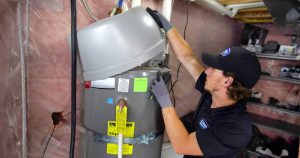
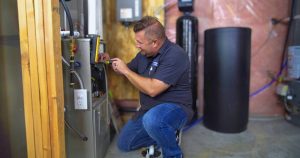
Once installed, a tankless water heater needs regular care. Annual professional maintenance typically includes flushing mineral scale from the heat exchanger, checking filters and service valves, inspecting venting and gas connections when applicable, and confirming safe operation. Addressing small warning signs early, such as inconsistent temperature, reduced flow, unusual noises, or error codes, can help prevent a no-hot-water emergency.
If your current water heater is failing, do not feel pressured to choose a replacement without answers. A qualified technician can explain whether repair is reasonable, what installation changes a tankless system would require, and which size will serve your home without the runaround.
Gillette Services can help homeowners weigh those details clearly, then install and maintain the system that fits their home. A little planning before replacement can turn the next busy morning into one less thing your family has to worry about.