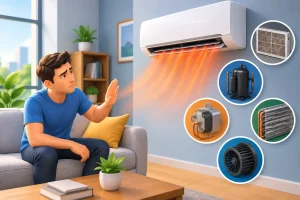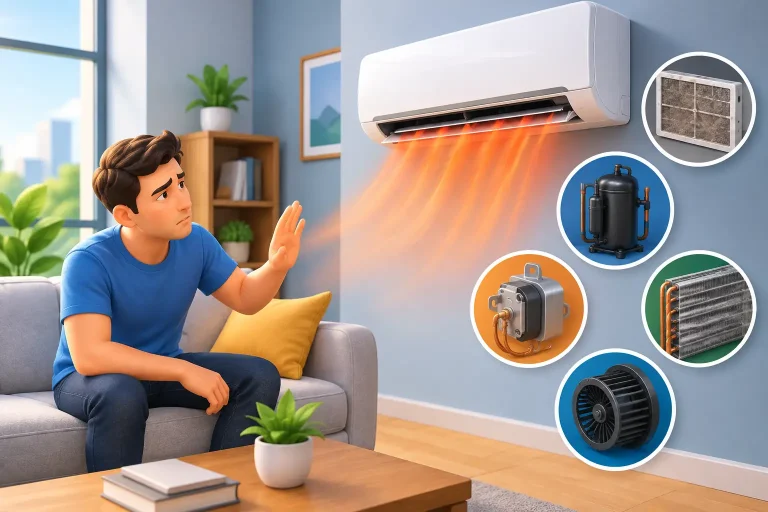
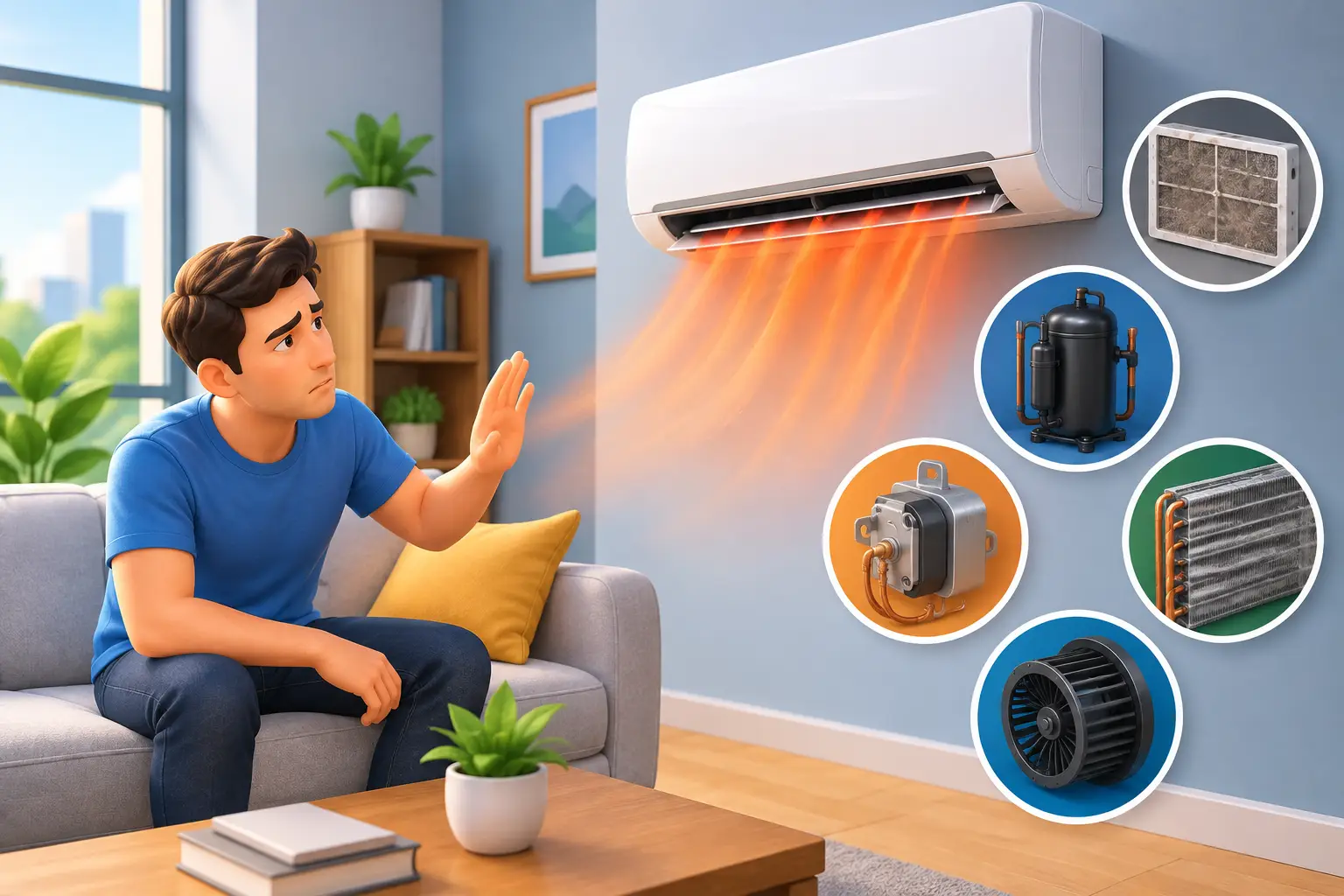
A hot July afternoon in Utah is a bad time to find warm air coming from your vents. If you are asking, why is my AC blowing warm, the answer may be as simple as a thermostat setting or as involved as a refrigerant leak, electrical failure, or compressor problem. A few safe checks can narrow it down quickly. If those do not solve it, prompt professional service can prevent a small repair from turning into a bigger one.
Why Is My AC Blowing Warm Instead of Cold?
Your air conditioner does not create cold air. It moves heat out of your home through a closed refrigeration process. When any part of that process is interrupted, the system may keep running and circulating air, but that air will feel warm or only slightly cool.
The first clue is how the system is behaving. Is air moving normally but never getting cold? Does the indoor blower run while the outdoor unit stays quiet? Did cooling fade gradually over several days, or stop suddenly after a storm? Those details help identify whether the issue is airflow, thermostat control, power, refrigerant, or mechanical equipment.
The Thermostat Is Set Incorrectly
Start with the simplest possibility. Confirm the thermostat is set to Cool, not Heat, Off, or Fan Only. Set the temperature at least 3 to 5 degrees below the current indoor temperature. If the fan setting is set to On, switch it to Auto.
With Fan On, the blower runs between cooling cycles and pushes room-temperature air through the vents. That can make it seem as though the AC is blowing warm even when the cooling equipment is functioning correctly. If your thermostat uses batteries, replace them if the display is dim, unresponsive, or showing a low-battery warning.
A Dirty Air Filter Is Restricting Airflow
A clogged filter can cause more trouble than many homeowners expect. It limits the air moving across the indoor evaporator coil, which can make the coil freeze. Once that happens, your system may blow weak, lukewarm air or stop cooling altogether.
Check the filter monthly during heavy-use months and replace it when it is visibly dirty. Many Utah County homes need a new filter every one to three months, depending on pets, remodeling dust, allergies, and the filter type. Do not use a highly restrictive filter unless your HVAC system is designed for it. Better filtration is useful, but airflow still matters.
If you find ice on the refrigerant line near the indoor unit or see water around the furnace or air handler, turn the cooling system off and set the fan to Auto. A frozen coil needs time to thaw, and continuing to run the AC can damage the compressor. Replace the filter, then schedule service to determine why the coil froze.
The Outdoor Unit Has Lost Power or Cannot Release Heat
The outdoor condenser is where your air conditioner releases heat from inside your home. If it is not running, the indoor blower may still circulate air, but it will not cool it.
Look through the top grille from a safe distance to see whether the fan is spinning. Check your electrical panel for a tripped breaker labeled AC, condenser, or HVAC. Reset a breaker once if it has tripped. If it trips again, leave it off and call a technician. Repeatedly resetting it can create a safety hazard and may worsen an electrical problem.
The outdoor unit also needs open space to do its job. Trim weeds, grass, and shrubs back from the sides, and remove leaves or loose debris from around the unit. Avoid spraying the unit with a pressure washer or trying to straighten damaged coil fins without the right tools. Bent fins and a dirty coil can reduce cooling performance, but electrical and refrigerant issues require professional diagnosis.
Common AC Problems That Need a Professional Repair
Some causes of warm air are not visible from the thermostat or filter slot. A trained technician can test system pressures, electrical components, temperature split, drainage, and airflow to find the actual failure rather than guessing.
Low Refrigerant From a Leak
Refrigerant does not get used up like fuel. If your AC is low, there is usually a leak somewhere in the system. Warning signs include cooling that gradually gets worse, ice on the refrigerant line, hissing sounds, and longer-than-normal run times.
Adding refrigerant without finding the leak is only a temporary patch. The proper repair is to locate and address the leak, confirm the system can hold pressure, and charge it to the manufacturer’s specifications. Refrigerant work requires specialized equipment and should never be a do-it-yourself job.
A Failed Capacitor, Contactor, or Motor
Your outdoor unit relies on electrical parts to start and keep the fan and compressor operating. A failing capacitor may cause humming, delayed starts, or an outdoor unit that will not run. A worn contactor can prevent power from reaching components. A failing fan motor can leave the compressor overheating because the unit cannot shed heat effectively.
These problems can resemble one another from inside the house. That is why a proper electrical test matters. Replacing the wrong part wastes time and may leave the real problem unresolved.
Compressor Trouble
The compressor is the heart of the cooling cycle. When it fails, the AC may run without producing cold air, make unusual noises, or trip a breaker. Compressor repairs can be significant, especially on an older unit.
Repair versus replacement depends on the equipment’s age, warranty status, refrigerant type, overall condition, and the cost of the repair. If the system is near the end of its service life and has had repeated breakdowns, replacement may offer better long-term value. If the rest of the system is in good condition, a targeted repair can still make sense.
Frozen or Dirty Evaporator Coil
The indoor coil can collect dust over time, especially when filters are neglected or ductwork has leaks. Dirt acts like a blanket over the coil, reducing its ability to absorb heat. Low refrigerant, blower problems, and restricted airflow can also freeze the coil.
Coil cleaning is not simply a matter of spraying a cleaner through the vents. The coil, drain system, blower assembly, and underlying airflow issue all need to be checked. Otherwise, the warm-air problem is likely to return.
What You Can Safely Check Before Calling
Before scheduling an AC repair, take a few minutes to rule out the easy fixes. These checks are safe for most homeowners and may help your technician diagnose the issue faster:
- Confirm the thermostat is on Cool, set below room temperature, and set to Fan Auto.
- Replace a dirty filter and make sure supply vents and return grilles are not blocked by furniture or rugs.
- Check for a tripped HVAC breaker, but reset it only once.
- Clear leaves and vegetation from around the outdoor unit without opening its electrical panels.
- Look for ice, water, burning smells, loud buzzing, or a unit that cycles on and off repeatedly.
Do not remove access panels, handle electrical wiring, or add refrigerant. Shut the system off and request service immediately if you smell burning, see damaged wiring, hear grinding or loud banging, or notice a breaker repeatedly tripping.
When Warm Air Is an Urgent Problem
A system that is blowing warm air is not always an emergency, but timing matters. Call for same-day help when indoor temperatures are climbing quickly, a young child, older adult, or medically vulnerable person is in the home, or a business needs cooling to protect customers, staff, or equipment.
It is also smart to act quickly after a thunderstorm or power outage if the outdoor unit will not start. Electrical surges can damage controls, capacitors, and thermostats. Waiting through several hot days forces the system to run longer, adds stress to already struggling components, and can increase energy costs.
Keep the Problem From Coming Back
Most cooling failures are not fully preventable, but regular maintenance catches many of the conditions that lead to warm air. A seasonal AC tune-up gives a technician time to inspect electrical connections, clean key components, verify refrigerant performance, clear the condensate drain, and identify worn parts before the hottest stretch of summer.
For homeowners and businesses in Utah County, Gillette Services provides straightforward diagnostics and fast repair help without the runaround. Whether the answer is a filter, a failed capacitor, a refrigerant leak, or a larger equipment decision, getting the right diagnosis first is the fastest path back to a comfortable home.
Warm air from the vents is your system asking for attention. Start with the simple checks, protect the equipment by shutting it down if it is frozen or making unsafe noises, and get help before a manageable issue becomes a long, uncomfortable day indoors.