A glass of water may taste fine while the water coming from the shower leaves your skin dry, laundry looks dull, and faucets collect mineral buildup faster than they should. A whole house water filtration system treats water as it enters the home, helping protect the water you drink, bathe in, cook with, and send through appliances every day.
For many Utah homeowners, the right answer is not simply “get a filter.” It is finding out what is actually in your water, then installing equipment that addresses that issue without paying for features your home does not need.
What a Whole House Water Filtration System Does
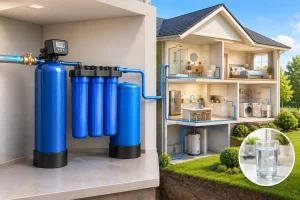
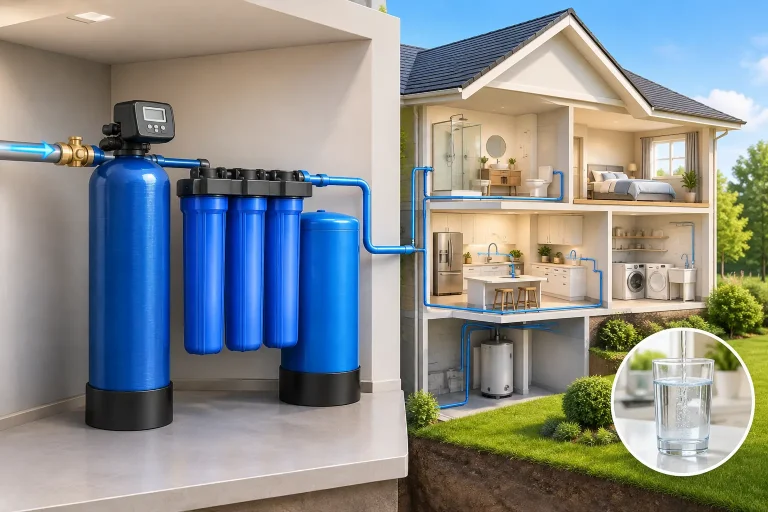
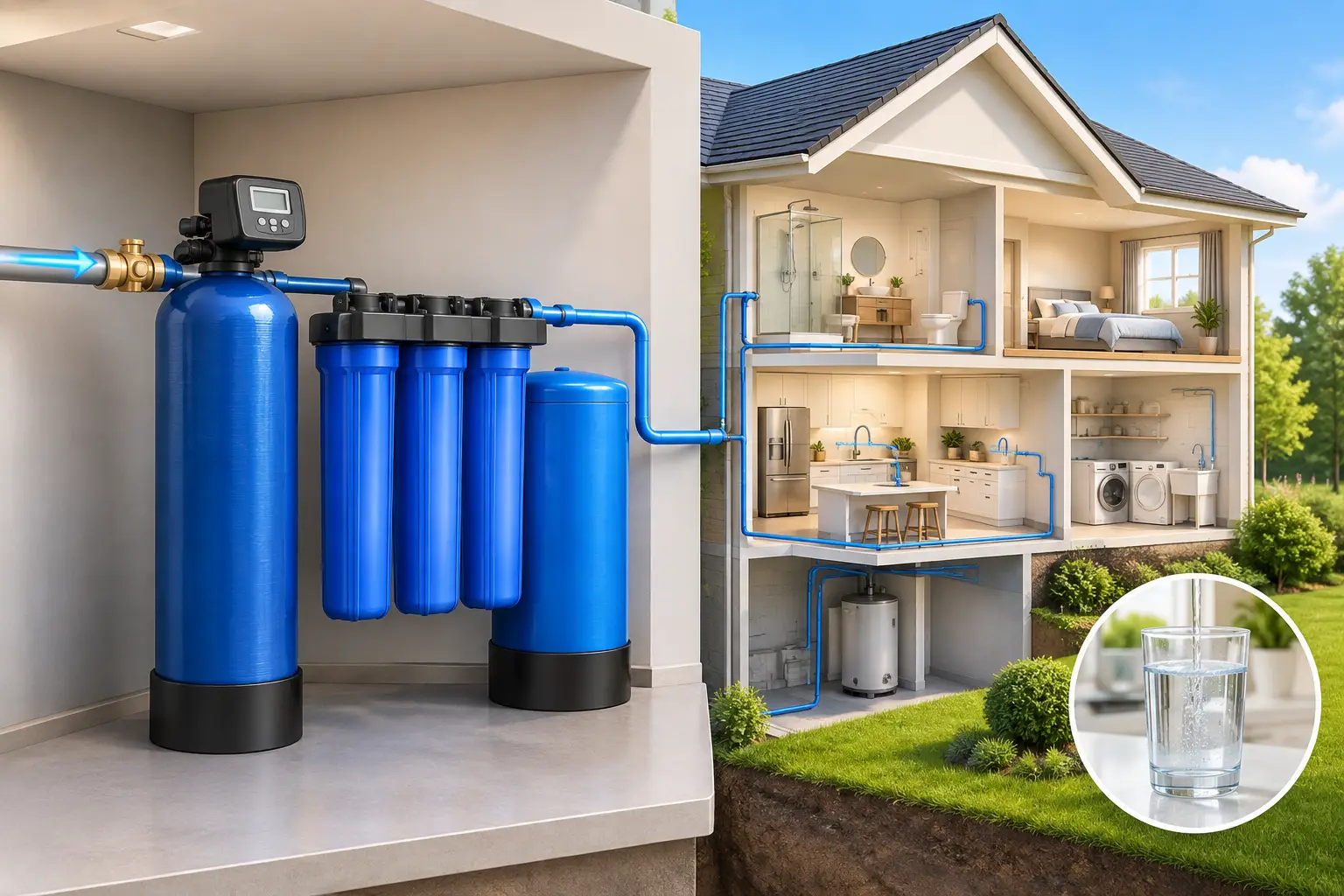
A whole house system, also called a point-of-entry system, is installed on the main water line. Every cold-water fixture downstream receives treated water, and so do your water heater, dishwasher, washing machine, ice maker, and most other water-using equipment.
The first stage is often a sediment filter. It captures sand, rust, scale particles, and other debris that can affect water clarity and clog smaller filters or fixture screens. Carbon filtration is another common stage. It can reduce chlorine, certain chemical tastes and odors, and some organic compounds. Depending on the equipment and the water conditions, a system may also include specialty media for chloramine, iron, sulfur odors, or other specific concerns.
That broad coverage is the key difference from a pitcher filter or a filter attached to one faucet. Point-of-use filters have a place, especially for drinking water, but they do not help your shower, washing machine, plumbing fixtures, or water heater.
Filtration, Water Softening, and Reverse Osmosis Are Different
These terms are often used interchangeably, but they solve different problems.
A water filter removes or reduces selected contaminants, particles, odors, or tastes. A water softener addresses hardness minerals, mainly calcium and magnesium. Those minerals are responsible for the white scale that shows up on shower doors, faucets, dishes, and heating elements. Reverse osmosis is usually installed at a kitchen sink and provides highly filtered drinking water at that one location.
Many homes benefit from more than one solution. For example, a family may use a sediment and carbon filtration system at the main line, a water softener to control hard-water scale, and reverse osmosis at the kitchen sink for drinking and cooking water. That combination is not necessary for every home, but it is a practical fit when testing shows multiple concerns.
A whole-home filter by itself usually will not eliminate hard-water spotting. Likewise, a softener does not automatically remove chlorine taste or every contaminant a family may be worried about. Matching the treatment method to the problem prevents disappointment later.
When a Whole-House System Makes Sense
A filtration system can be a good investment when water has a noticeable chlorine smell, a chemical taste, visible sediment, recurring rust-colored particles, or unpleasant odors. It can also help homeowners who want cleaner water throughout the house rather than only at a single drinking-water faucet.
In communities supplied by municipal water, disinfection is necessary for public health. Chlorine or chloramine can still affect water’s taste and smell, and some people prefer reducing those compounds before the water reaches showers and fixtures. Homes on private wells may face a different set of concerns, such as sediment, iron, sulfur odors, bacteria, or changing water quality after seasonal runoff.
Hard water is common across much of Utah. If scale is your primary frustration, start by discussing a softener or a combined water-treatment approach. If you also notice chlorine odor or sediment, filtration may be part of the answer. The best setup depends on the water source, existing plumbing, household size, and the results of a water test.
Start With a Water Test, Not a Guess
Water treatment equipment is most effective when it is selected based on real information. A professional water assessment can identify hardness, sediment, iron, pH, total dissolved solids, and other conditions that influence what equipment is appropriate.
Testing matters because symptoms can be misleading. White residue often points to hardness, but it may not tell you how severe it is. A rotten-egg smell can come from sulfur, bacterial activity, or sometimes the water heater itself. Brown water may be a plumbing issue, sediment entering the home, or a problem that deserves prompt investigation.
For private wells, comprehensive testing is especially valuable. Well water can change over time, so a system that worked years ago may no longer match current conditions. If testing reveals a health-related concern, do not assume a standard carbon filter will solve it. Treatment should be designed for the specific contaminant and verified after installation when appropriate.
How to Choose the Right System
The right equipment should be sized for how your household actually uses water. A small filter that restricts flow can leave showers weak when someone is running the dishwasher or washing clothes. A properly sized system accounts for the number of bathrooms, family members, fixtures, and simultaneous water use.
Look closely at what a system is designed to reduce. “Whole-house filtration” is a broad label, not a guarantee that every filter addresses every water concern. Ask which contaminants or conditions the media is intended for, how long it is expected to last, and what maintenance it requires.
It is also smart to consider the installation itself. Main-line plumbing, bypass valves, drain access for certain treatment systems, and available space all affect the final setup. A professional installer can make sure the system is accessible for service and does not create unnecessary pressure loss or plumbing complications.
Cost should include more than the equipment price. Filter replacements, media changes, service needs, salt if a softener is included, and expected lifespan all matter. A less expensive unit that requires frequent cartridges may cost more over time than a properly sized system with longer service intervals.
Maintenance Keeps Water Treatment Working
Water treatment equipment is not a set-it-and-forget-it purchase. Sediment filters need replacement before they become clogged. Carbon media eventually loses its ability to reduce the compounds it was installed to address. Softeners need salt and periodic checks, while reverse osmosis systems need scheduled filter and membrane service.
Maintenance timing depends on water quality and household demand. A large family, high sediment levels, or frequent appliance use can shorten replacement intervals. Waiting until flow drops, water tastes different, or equipment stops performing means the system may have been overdue for service for some time.
Keep a simple record of filter changes and service dates. If your water source changes, you move into a different home, or you see new staining, odors, or scale, schedule another evaluation rather than assuming the existing system still fits the problem.
Protecting Plumbing and Everyday Comfort
Cleaner water can do more than improve the taste of a cold glass from the kitchen tap. Reducing sediment can help protect fixture aerators, valves, and appliance screens. Addressing hard water can limit scale buildup that makes water heaters and dishwashers work harder. Carbon filtration may make showers more pleasant for families sensitive to chlorine smell.
Still, it helps to keep expectations realistic. Filtration will not repair old corroded pipes, fix a failing water heater, or make unsafe water safe unless the system is specifically designed and maintained for the issue involved. Water treatment works best as one part of a well-maintained plumbing system.
Get a Recommendation Built Around Your Water
A whole-house setup should fit your home instead of following a one-size-fits-all sales pitch. At Gillette Services, our team can evaluate your water concerns, explain the options in plain language, and install a solution that makes sense for your plumbing and your household.
If your water leaves spots on everything, smells off, tastes unpleasant, or carries visible sediment, start with answers. The right treatment plan can make every tap in the house feel like it is working better for your family.