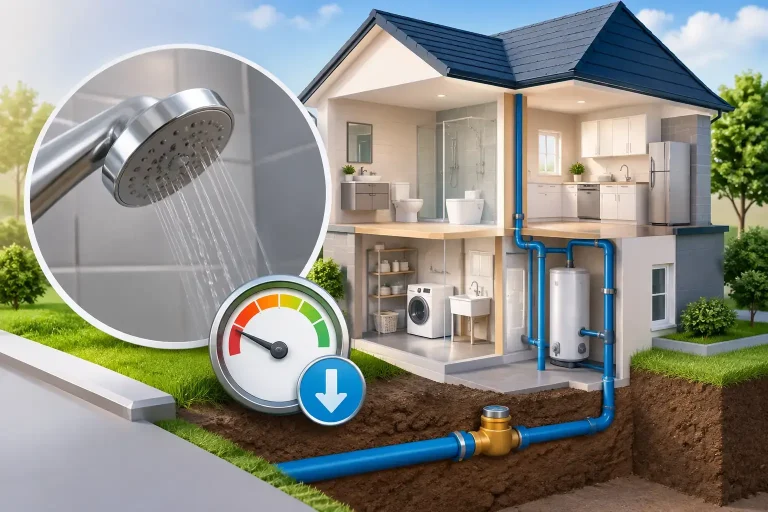
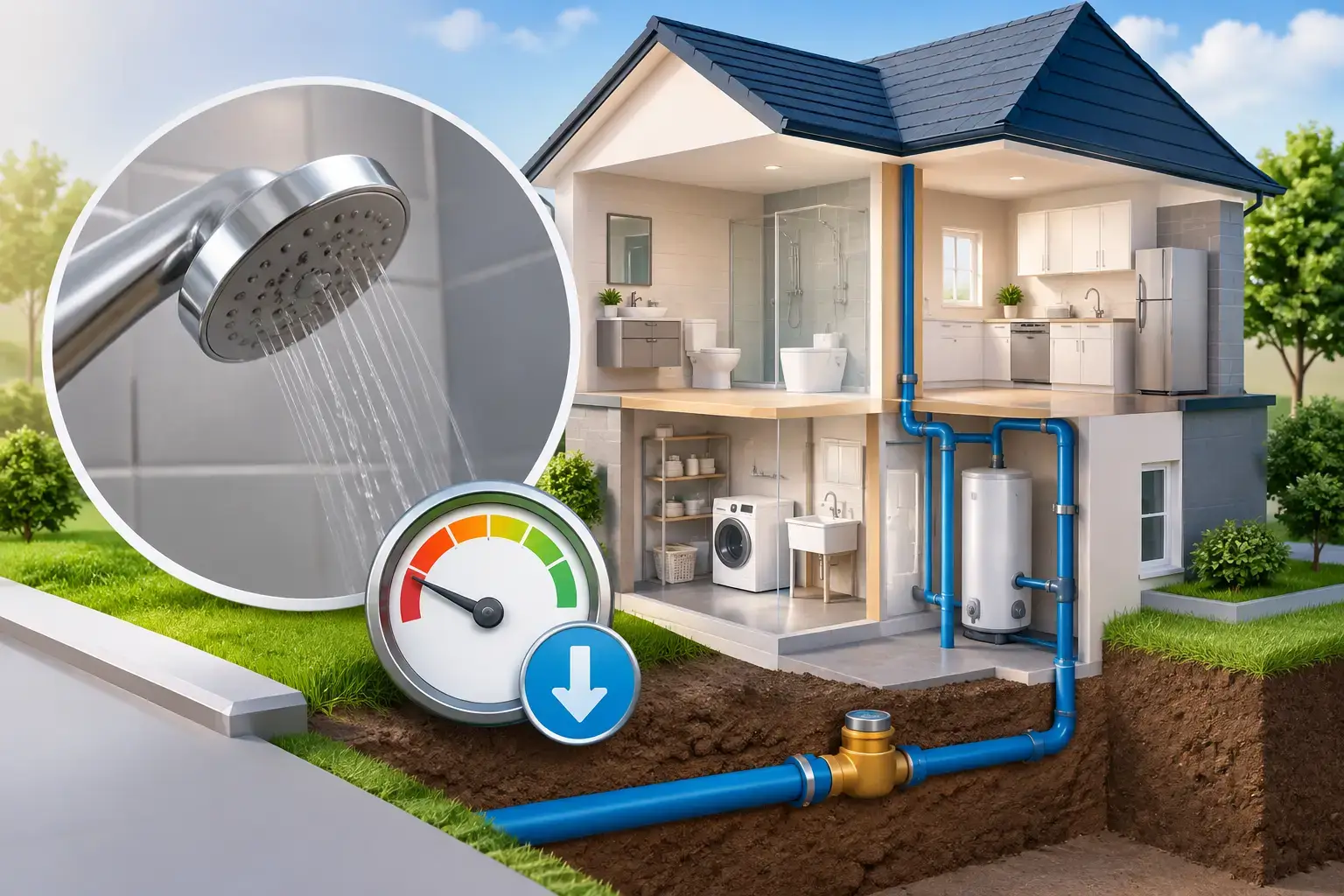
A shower that turns from refreshing to frustrating when someone starts the dishwasher is not something you should have to live with. If you are asking what causes low water pressure, the answer can range from a five-minute fixture cleanup to a plumbing issue that needs prompt attention. The key is noticing where the problem occurs, when it began, and whether it is getting worse.
Low pressure can make ordinary routines take longer, from rinsing dishes to filling a washing machine. In some cases, it can also be an early warning of a leak, pipe deterioration, or a failing pressure-control component. Here is how to narrow down the cause without the runaround.
Low Water Pressure or Low Water Flow?
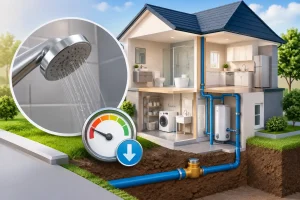
People often use pressure and flow interchangeably, but the difference matters. Water pressure is the force that pushes water through your pipes. Water flow is the volume that actually comes out of a faucet or showerhead.
A clogged showerhead can reduce flow at that one fixture even when the home has normal water pressure. On the other hand, weak water at every sink, shower, and appliance may point to a larger issue with the main water supply, a pressure regulator, or the home’s piping.
Start by testing both hot and cold water at several fixtures. Then test a faucet on the first floor and, if applicable, one upstairs. Those quick observations give a plumber useful information and can help you avoid replacing the wrong part.
What Causes Low Water Pressure at One Fixture?
When only one sink, shower, or tub has weak water, the issue is usually close to that fixture. Mineral buildup is especially common in Utah homes because hard water leaves deposits behind over time. The small openings in faucet aerators and showerheads can slowly clog, restricting water even though the rest of the home seems fine.
Remove the aerator at the tip of a faucet and check for grit, white scale, or debris. A careful cleaning may restore normal flow. Showerheads can often be cleaned as well, but older units with heavy buildup may be better replaced.
A partially closed fixture shutoff valve is another common culprit. Most sinks and toilets have small valves under or behind them. If a valve was bumped during cleaning, a previous repair, or a remodeling project, it may no longer be fully open. Do not force a valve that is corroded or difficult to turn. Older valves can leak or break when disturbed.
If the problem affects only hot water, sediment in a water heater or a restriction in the hot-water piping could be involved. A drop in hot-water flow deserves a professional look, particularly if the water heater is aging, making unusual noises, or showing signs of corrosion.
Common Causes of Low Water Pressure Throughout the House
Weak water at multiple fixtures usually calls for a broader inspection. A few possible causes are easy to check, while others are best handled by a licensed plumbing professional.
A partially closed main shutoff valve
Your home has a main shutoff valve that controls the water entering the plumbing system. It may be near the water meter, where the service line enters the home, or in a utility area. If it is only partly open, every fixture may have reduced pressure.
This can happen after plumbing work, emergency leak repairs, or a water-service interruption. Because the valve location and type vary, it is wise to have a technician inspect it if you are unsure. Turning the wrong valve can shut off water to the house or create a leak at an older connection.
A failing pressure regulator
Many homes have a pressure-reducing valve, also called a pressure regulator. Its job is to lower high municipal supply pressure to a safe level for your plumbing fixtures, appliances, and pipes. When it starts to fail, pressure may become consistently low, fluctuate from day to day, or spike and fall without an obvious reason.
Pressure regulators do not last forever. The right solution depends on an accurate pressure reading and the condition of the valve. Replacing one based only on a guess can waste time and money, so this is a good place to bring in a plumber with the right testing equipment.
A hidden water leak
Leaks do not always announce themselves with a puddle. A leak in a wall, beneath a slab, in a crawlspace, or along an underground service line can reduce available pressure while wasting water around the clock.
Watch for an unexplained jump in your water bill, damp flooring, warm spots on the floor, mildew odors, wall stains, or the sound of water moving when no fixture is running. If you suspect a leak, act quickly. The longer water escapes, the greater the chance of structural damage and costly repairs.
Corroded or restricted pipes
Older galvanized steel pipes can corrode internally. As corrosion builds, the inside diameter of the pipe gets smaller, limiting the water that can pass through. The outside of the pipe may look acceptable while the inside is heavily restricted.
This issue often develops gradually. Homeowners may notice that pressure is poor in certain parts of the house, that rusty water appears after water has been sitting, or that the problem has worsened over several years. Targeted pipe repairs can help in some cases, but widespread corrosion may make repiping the smarter long-term investment.
Sediment and hard-water scale
Hard-water minerals affect more than faucet aerators. Scale can collect in supply lines, valves, water heaters, appliance hoses, and fixture cartridges. Sediment may also enter plumbing after municipal water work or a disruption in the water supply.
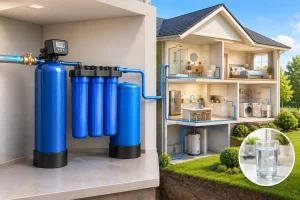
Water treatment can reduce the ongoing effects of hard water, but it will not automatically clear a serious existing blockage. A plumber can identify whether cleaning, repair, replacement, or a water-treatment upgrade makes the most sense for your home.
A problem with the water meter or municipal supply
If your whole neighborhood has weak water pressure, the issue may be outside your property. Construction, a water-main repair, high-demand periods, or a municipal service problem can temporarily affect pressure. Check with a nearby neighbor before assuming the problem is inside your plumbing.
If neighbors have normal pressure and yours is low, the service line, meter connection, or a home-side plumbing component may need attention. Do not attempt to adjust or tamper with the water meter yourself.
Why Does Pressure Drop When More Than One Fixture Runs?
A modest pressure change when multiple fixtures run is normal, especially in an older home. But a severe drop, such as a shower slowing to a trickle when a toilet flushes, usually points to a system that cannot deliver enough water volume.
The cause could be undersized supply piping, pipe restrictions, a weak pressure regulator, or a water service line that is too small or deteriorated. Homes that have been remodeled or expanded sometimes have water demands their original plumbing was never designed to handle.
This is also where the difference between a quick repair and a larger upgrade matters. Cleaning one fixture will not solve a supply-line capacity problem. A proper evaluation looks at pressure, pipe size, water demand, fixture condition, and the age of the system before recommending a repair.
Safe Checks You Can Do Before Calling a Plumber
You do not need to take apart your plumbing to gather helpful clues. Check whether the issue affects hot water, cold water, or both. See if it is limited to one fixture or shows up throughout the home. Notice whether it started suddenly after a repair, water outage, or construction nearby.
You can also look for obvious leaks under sinks, around toilets, near the water heater, and at exposed pipes. Check that appliance supply valves appear fully open, and inspect faucet aerators for visible debris. If you have a pressure gauge, a technician can use that reading as a starting point, but pressure testing is most useful when interpreted alongside the rest of the system.
Avoid using chemical drain cleaners, forcing stiff valves, or cutting into pipes to chase a pressure issue. Those steps can turn a manageable service call into water damage or an emergency repair.
When Low Water Pressure Needs Fast Help
Call for professional plumbing service promptly if pressure drops suddenly throughout the house, you see active leaking, your water is discolored, or you hear water running when everything is turned off. The same goes for pressure that swings wildly between very low and unusually high. Excessively high pressure can damage hoses, valves, water heaters, and fixtures just as surely as low pressure can disrupt daily life.
For homes and businesses in Utah County, Gillette Services can diagnose low water pressure at the source, from clogged fixtures and leaking lines to failing regulators and aging pipes. A clear diagnosis matters because the right repair should solve the problem you have, not simply mask the symptom.
Weak water pressure is frustrating, but it is usually a problem with a traceable cause. Pay attention to the pattern, protect your home from potential leaks, and get the system checked before a small restriction becomes a larger plumbing repair.