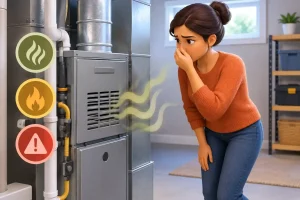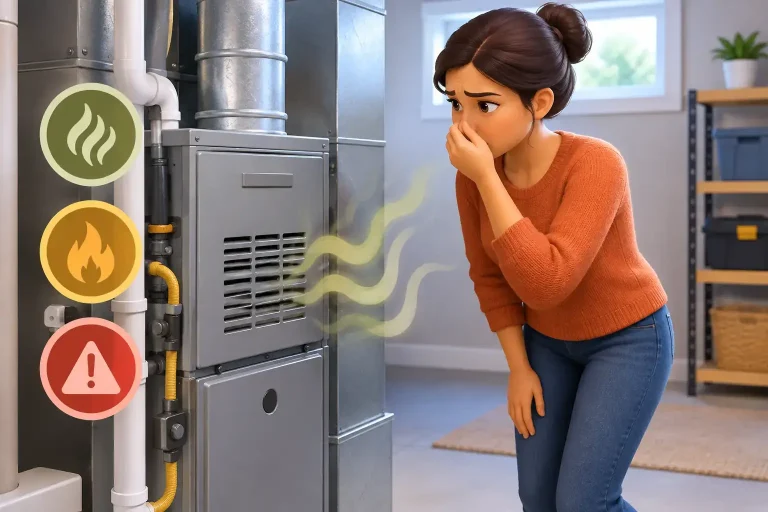
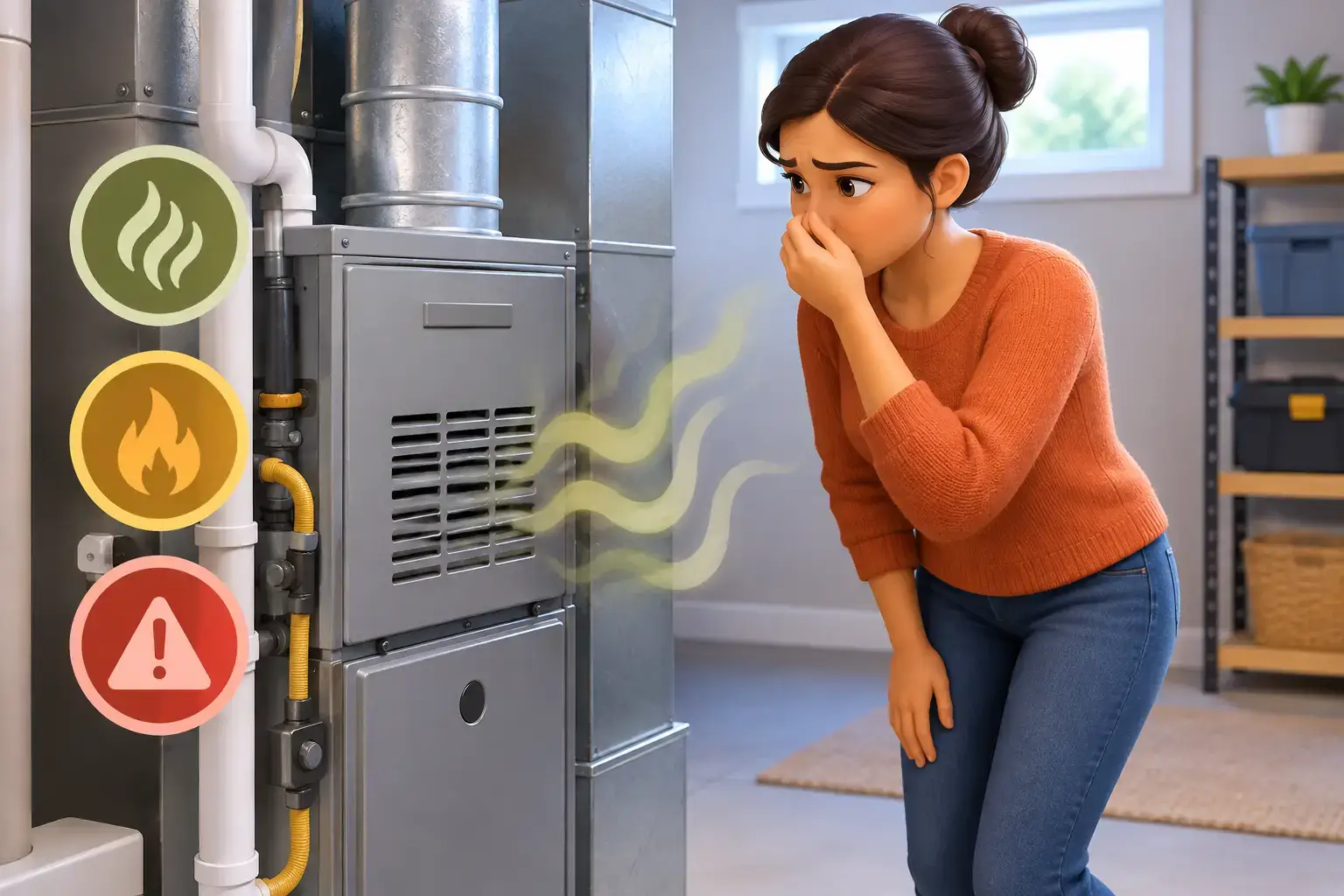
A furnace smell can turn an ordinary cold morning into a real concern fast. So, does furnace smell mean danger? Sometimes, yes. Other times, it is a normal part of starting a heating system after months of sitting idle. The difference comes down to the type of odor, how strong it is, whether it goes away, and whether anyone in the building feels unwell.
Your furnace should not be a mystery. If something smells off, trust your nose, take the safe first step, and get a qualified technician involved when the warning signs point to a fuel, electrical, or mechanical problem.
When a Furnace Smell Means Danger
Some furnace odors call for immediate action. Do not try to troubleshoot these issues by taking panels off, relighting equipment, or running the furnace again to see if the smell clears. Shut the system down if you can do so safely, get people and pets away from the area, and arrange professional help.
Rotten egg or sulfur smell
Natural gas has no smell on its own. Utility companies add a sulfur-like odorant so a gas leak is easier to detect. If your furnace area, utility room, basement, or vents smell like rotten eggs, treat it as a possible gas leak.
Leave the building right away. Do not turn lights, appliances, thermostats, or switches on or off. Avoid using phones or vehicles near the suspected leak, and do not light a match or smoke. Once you are a safe distance away, call 911, your gas utility, or emergency HVAC service. A gas leak can create a fire or explosion hazard and should never wait for a regular appointment.
Burning electrical or melting plastic smell
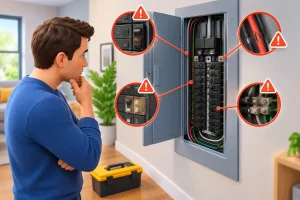
A sharp electrical odor, hot-wire smell, or smell of melting plastic may signal overheating wiring, a failing blower motor, a damaged control board, or another electrical fault. Turn off the furnace at the thermostat and breaker only if you can do it without approaching smoke, sparks, or visible fire. If there is smoke or fire, leave and call 911.
A brief dusty smell at first startup is one thing. A persistent burning smell is another. Do not assume it will burn off if it returns every heating cycle or gets stronger.
Exhaust or fumes inside the home
A properly operating gas furnace vents combustion gases outdoors. If you smell exhaust, fumes, or an unusual chemical odor indoors, stop using the furnace and have it inspected promptly. A cracked heat exchanger, blocked vent, disconnected flue pipe, or combustion problem can allow dangerous gases into occupied areas.
Carbon monoxide itself has no odor, color, or taste. That means you cannot rely on smell to detect it. Every home with fuel-burning equipment should have working carbon monoxide alarms outside sleeping areas and on each level of the home. If a carbon monoxide alarm sounds, get everyone outside immediately and call 911 or the fire department from a safe location.
Furnace Odors That Are Often Less Serious
Not every smell means an emergency. Still, a smell that lingers, worsens, or appears with poor heating performance deserves attention. Utah County homes often go months without running the furnace, so seasonal startup odors are common. They should be brief.
Dust burning off after the first startup
A dusty or slightly burnt smell when you first turn on the heat in fall is usually dust on the heat exchanger, burners, or ductwork warming up. It typically fades within a few heating cycles. Opening a window briefly and replacing a dirty air filter can help.
If the odor lasts beyond a day or two, fills the home heavily, or comes with smoke, shut the furnace off and schedule service. Thick dust buildup, a clogged filter, or an overheating component may be contributing to the problem.
Musty or dirty-sock smell
Musty odors often point to moisture, microbial growth, dirty ductwork, or a dirty filter. The source may be the furnace, but it can also be a humidifier, drain issue, or duct system problem. This is not usually an immediate life-safety emergency, but it can affect indoor air quality and should be addressed, especially if household members have allergies or asthma.
Start with a clean filter and check for obvious moisture around the equipment. A technician can determine whether the issue involves ducts, the furnace cabinet, a humidifier, or a ventilation concern.
Oil or smoky odor
Oil-fired systems can produce odors from a fuel leak, burner issue, or incomplete combustion. A smoky smell may also indicate a blocked flue or a burner that needs adjustment. Turn the system off and call for service rather than continuing to run it. The risk varies by cause, but oil and smoke odors are not normal operating conditions.
Dead animal or sewage-like smell
A dead-animal odor may come from a rodent or small animal in ductwork, near equipment, or in an outdoor intake. A sewage smell can sometimes be caused by a dry floor drain or plumbing issue near the furnace, rather than the heating system itself. Neither necessarily means the furnace is dangerous, but both deserve a careful inspection so the actual source is found instead of masked with air freshener.
What to Do When You Notice a Furnace Smell
Your next step should match the risk. For a gas smell, carbon monoxide alarm, smoke, sparking, or strong electrical odor, leave the building and call emergency help. Do not wait to see whether the furnace starts working normally again.
For a mild dusty smell on the first cold day of the season, monitor it through a few short heating cycles. Replace the filter if it is dirty, and make sure supply and return vents are open and clear. Avoid storing paint, gasoline, cleaning solvents, or other chemicals near the furnace. Those products can create odors and present their own safety concerns.
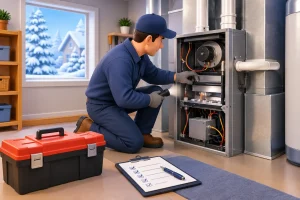
If the smell is persistent but not an emergency, turn the system off and schedule a diagnostic visit. A trained HVAC technician can inspect burners, wiring, the blower assembly, venting, gas connections, condensate drains, and the heat exchanger. That is the practical way to separate a simple maintenance issue from a repair that cannot wait.
Why Smells Can Be More Noticeable in Winter
During heating season, homes are closed up tighter. Windows stay shut, and the furnace moves air through the same living spaces for hours at a time. That can make a small odor more noticeable than it was during mild weather.
High-efficiency furnaces also have specific venting and drainage requirements. Snow, ice, debris, or animal nesting around exterior intake and exhaust pipes can interfere with proper operation. After a storm, a quick visual check from a safe distance is worthwhile. Do not block or cover the pipes, and do not attempt repairs if you see damage.
Prevention Is the Best Way to Avoid Furnace Odors
Annual furnace maintenance is not just about avoiding a breakdown on the coldest night of the year. It gives a technician a chance to inspect combustion, clean components, test safety controls, check venting, and spot worn electrical parts before they produce an odor or a no-heat call.
Homeowners can help between visits by changing filters on schedule, keeping the furnace area clear, testing carbon monoxide alarms monthly, and paying attention to changes in sound, cycling, or airflow. A furnace that suddenly smells different is telling you something. Acting early is usually safer and less expensive than waiting for a complete failure.
For families and businesses in Utah, fast answers matter when the heat is running. Gillette Services can inspect the source of an unusual furnace smell, explain what is happening in plain language, and fix the problem without the runaround. If the odor feels unsafe, make the cautious call first. Your comfort can be repaired, but your safety should never be put on hold.